Smarter Study
Better Doctors
eMedici helps medical students and doctors prepare with confidence for exams and practice in the Australian context.
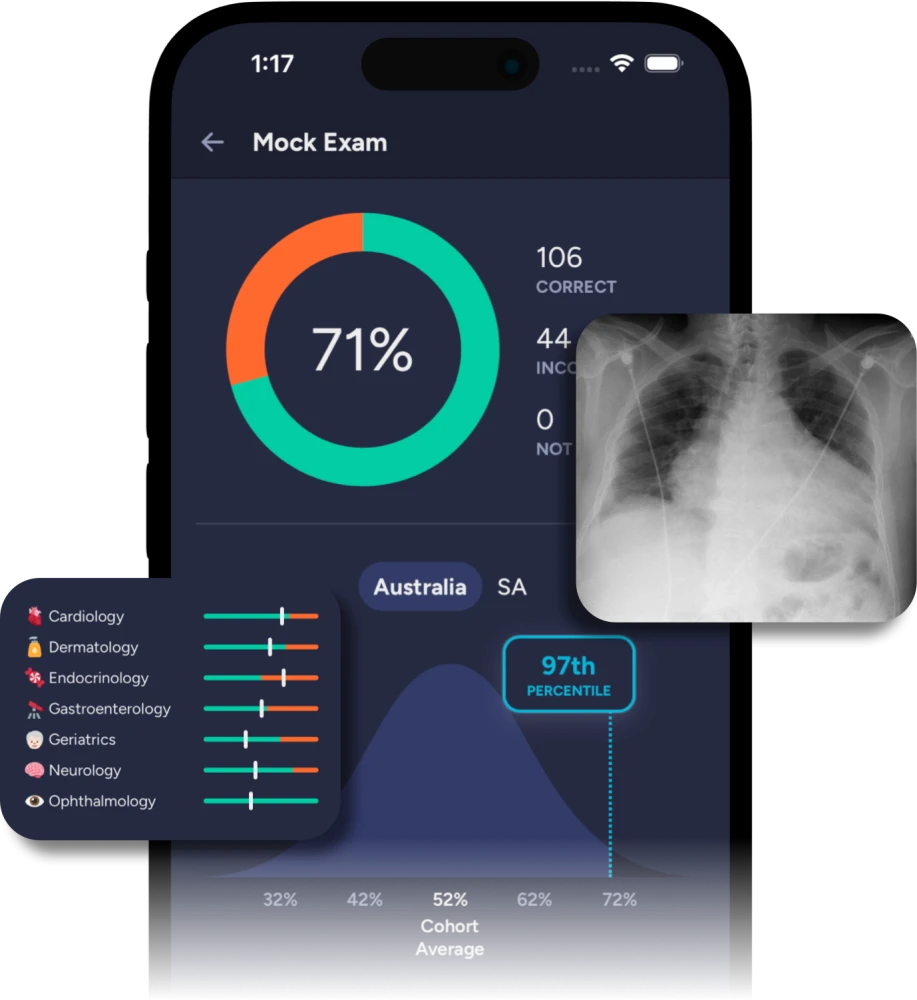
eMedici Is Trusted by 80,000+ Students, Doctors, and IMGs


Smarter Study for your Australian Medical Journey
Wherever you are in your training, eMedici has comprehensive resources built for the work ahead, from foundational science and clinical placements to AMC preparation, GP exams, specialty training, and teaching.
Medical Students
Foundations, clinical placements, OSCEs, exams, and internship readiness.
International Medical Graduates
AMC exam preparation and Australian clinical practice.
GP Registrars
AKT, KFP, and clinical exam preparation.
Junior Doctors & Specialty Training
Ward confidence, CPD, and specialty exam preparation.
-

Basic Science
Medical Students Health ProfessionsStart with the foundations of medicine, from anatomy and physiology to pathology, pharmacology, embryology, statistics, and more.
-

Clinical Medicine
Medical Students International Medical GraduatesBuild clinical reasoning with MCQs, OSCE stations, clinical cases, and explanations for Australian medical practice.
-

AMC MCQ Questions
International Medical GraduatesThe official AMC Part 1 MCQ resource, free with your AMC MCQ exam authorisation. Practise with 210 AMC questions and familiarise yourself with the exam style.
-

Junior Doctor
Medical Students Junior Doctors International Medical GraduatesMove from student to doctor with ward-based MCQs and clinical case scenarios for Australian interns and residents.
-

GP AKT/KFP
GP RegistrarsPrepare for RACGP AKT and KFP exams with expert-reviewed questions, detailed explanations, and blueprinted mock exams.
-

GPRA Clinical Cases
GP RegistrarsClinical cases for GP Registrars preparing for their Australian general practice clinical exams - both ACRRM and RACGP.
Built by Australian doctors. Backed by Australian guidelines.
Our content is crafted by clinicians and educators who know the Australian system – so you’re not just prepared, you're practising with confidence.
Our Philosophy-
 Dr Toby ZernerChief Technology Officer
 -
 Dr Hannah PhamMedical Educator / General Practitioner
 -
 Prof Peter DevittConsultant, Royal Adelaide Hospital
 -
 Mr Jacob Waye-HarrisChief Legal Officer
 -
 Dr Stefan Court-KowalskiICU Registrar, Royal Adelaide Hospital
 -
 Dr Karanjot LallPaediatric Registrar
 -
 Dr Addison DavisRural Generalist, Patrick Street Clinic
 -
 Dr Neysan SedaghatGeneral Practitioner
 -
 Dr Krystal GreenGeneral Practitioner
 -
 Dr Sarah WilkinsonEmergency Medicine Registrar / Discipline Editor
 -
 Dr Jun Yen NgFellow, Haematology, Canberra Hospital, Australian National University
 -
 Dr Joshua TavernerGeneral Medicine Registrar, Western Hospital
 -
 Dr Stephanie DawsonGeneral Practitioner
 -
 Dr Jess SullivanIntern, SA Health
 -
 Dr Karan VarshneyMedical Intern, South West Healthcare
 -
 Dr Marita BolicIntern, Queensland Health
 -
 Darren TanFinal-Year Medical Student at Monash University
 -
 Dr Theodore VelkosResident Medical Officer, Royal Adelaide Hospital
 -
 Dr Dylan BarnettGeneral Surgery Registrar, Royal Adelaide Hospital
 -
 Dr Belinda LoweStaff Specialist O&G
 -
 Dr Georgia Smithson-TomasEndocrinology Advanced Trainee, Queensland Health
 -
 Marc EskanderOptometrist & Medical Student
 -
 Dr Roger ParnisPaediatric Basic Trainee, Children's Hospital at Westmead
 -
 Dr Cristina ValeroConsultant General Practitioner, University of Adelaide
 -
 Dr Jarrad HopkinsRenal Registrar, Royal Adelaide Hospital
 -
 Dr Victoria LangtonBasic Physician Trainee, Royal Adelaide Hospital
 -
 Dr Shilsha NinanBasic Physician Trainee (Paediatrics), Women's and Children's Hospital
 -
 Abhilash DhruvaMedical Student
 -
 Kevin KimMedical Student
 -
 Tony DiepMedical Student
 -
 Dr Callum DeakinChild and Adolescent Psychiatrist, Women's and Children's Hospital
 -
 Dr Darren ForemanUrologist, Flinders Medical Centre
 -
 Dr Matthew ChoDermatologist
 -
 Prof John CromptonOphthalmologist, University of Adelaide
 -
 Dr Alexander HowesPaediatric Emergency Medicine Consultant, Women's and Children's Hospital
 -
 Dr Sanghamitra GuhaEndocrinologist, Royal Adelaide Hospital
 -
 Prof Hubertus JersmannRespiratory Physician, University of Adelaide
 -
 Dr Mike SmithConsultant Orthopaedic Surgeon, University of Adelaide
 -
 Dr Prue StandenObstetrician and Gynaecologist, St Vincent's Hospital
 -
 Dr Andrew MorrisConsultant Orthopaedic Surgeon, University of Adelaide
 -
 Prof Robert FitridgeConsultant Vascular Surgeon, University of Adelaide
 -
 Dr Steven KnoxConsultant Radiologist, Royal Adelaide Hospital
 -
 Prof Christian Hamilton-CraigConsultant Cardiologist, University of Queensland
 -
 Dr Tharani KrishnanMedical Oncologist, Flinders Medical Centre
 -
 Dr George BalalisBariatric, Upper GI and General Surgeon, Dr George Balalis Clinic

eMedici combines high-quality material and robust peer review with a uniquely Australian focus. UNSW students value the confidence they can place in learning relevant information for their future practice. I recommend this excellent resource.
Senior Vice Dean (Education), UNSW Medicine & Health
eMedici is an excellent resource which my friends and I use for exam and OSCE preparation. The thorough explanations and the fact that each question has been reviewed by a specialist is reassuring and allows me to learn around the topic rather than just for a specific question. The smooth interface is enjoyable to interact with and helps divide up my studying.
Medical Student, Monash University

eMedici has been hugely popular among students throughout the clinical years of the program. Students appreciate the opportunity to practise clinical reasoning on authentic cases aligned to their clinical disciplines, and academics value the provision of formative assessment.
Dean and Head of School, UWA Medical School
eMedici for Educators
Support your teaching with eMedici